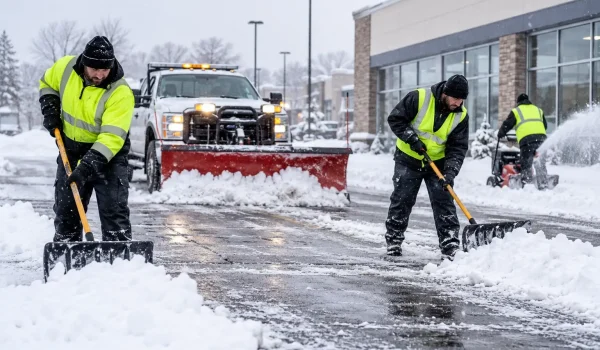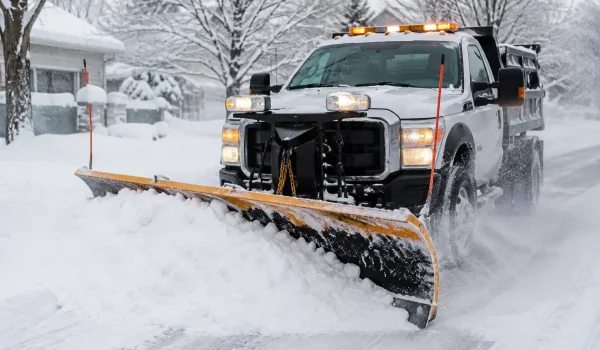
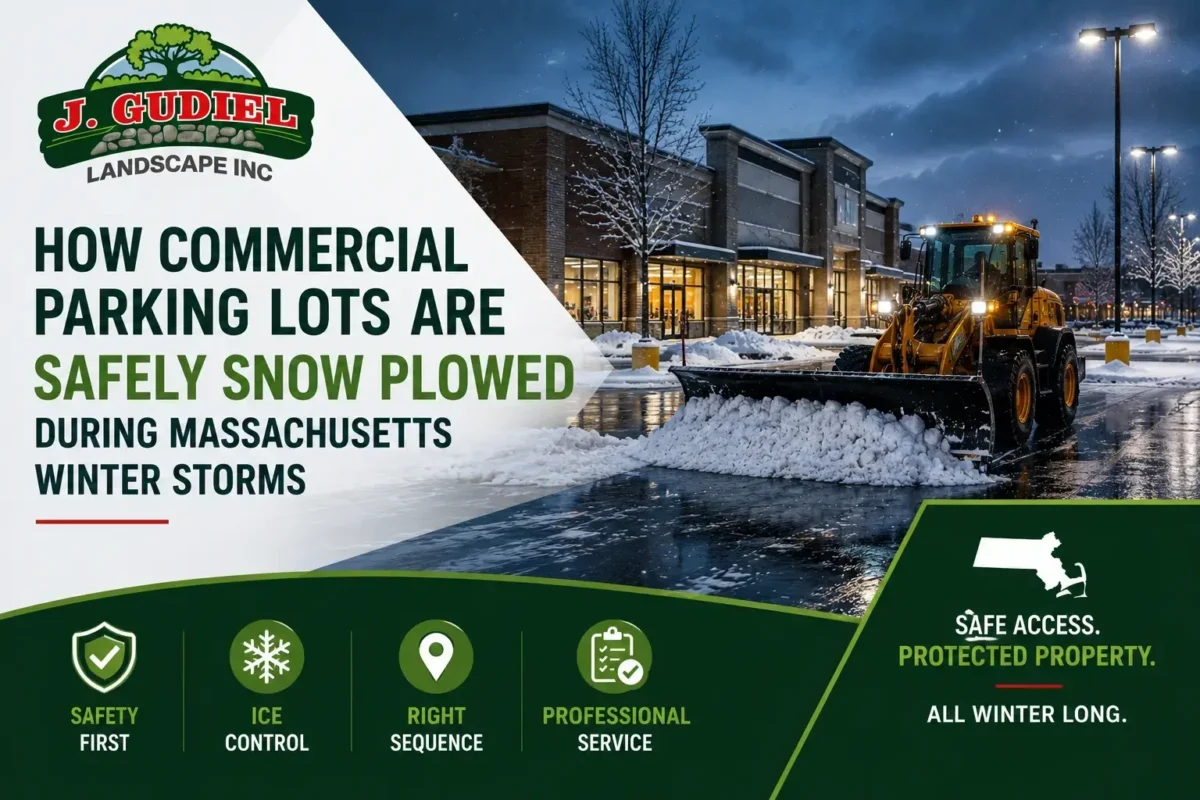
Most parking lots get plowed. Not all of them get cleared safely. The difference comes down to sequence, priority, timing, and what happens after the plow leaves.
Massachusetts storms create specific conditions that make commercial parking lot management more demanding than most property owners realize. Snow compacting under traffic turns to ice. Shaded areas refreeze hours after plowing. Accessible spaces and fire lanes carry legal requirements that go beyond just moving snow out of the way. A professional snow management operation accounts for all of this. A basic plow-and-go service does not.
What Happens Before the Storm Arrives
Pre-season site assessment is where professional snow management starts. Before the first storm of the year, a crew walks the property to map the lot layout, mark curbs, islands, catch basins, fire hydrants, and any obstacles hidden once snow accumulates. Reflective stakes go along curb lines so plow operators can see them at 3am during a Nor’easter without guessing where the pavement ends.
Pre-treatment is the other critical pre-storm step. Liquid brine, a saltwater solution, applied to paved surfaces before snowfall begins prevents snow and ice from bonding to the pavement. Post-storm clearing is faster and requires less de-icing material. On high-traffic commercial lots in Massachusetts where black ice is a recurring problem, pre-treatment is worth including in the contract scope.
Priority Zones: What Gets Cleared First and Why
Professional crews do not plow a commercial lot randomly. Every storm follows a priority sequence based on safety and legal requirements.
Fire lanes and emergency access routes come first. The Massachusetts Department of Fire Services requires emergency vehicle access to commercial properties at all times. A blocked fire lane is a safety hazard and a code violation regardless of how much snow fell.
ADA-compliant accessible parking spaces and their access aisles are next. Massachusetts MAAB regulations under 521 CMR require all accessible features to remain fully operational. Clearing regular parking spaces before accessible ones creates liability exposure.
Main traffic lanes and entrance points follow. Customers and employees need to reach the property safely. Entrances left snowpacked become compacted ice within hours of traffic, particularly when temperatures drop overnight after a storm.
Secondary parking areas are cleared last. Getting the property open and safe takes precedence over clearing every corner of the lot simultaneously.
How a Commercial Parking Lot Is Actually Plowed
Back dragging is the first technique applied near buildings and tight spaces. Plow operators use reverse to pull snow away from building entrances, loading docks, and overhead doors before pushing it toward designated pile zones. Snow pushed directly against buildings causes drainage problems during melt cycles and can damage structures over time.
Windrowing follows. Operators push snow in long rows toward the perimeter of the lot, progressively moving it away from travel lanes and parking areas. The direction of plowing accounts for wind direction where possible, so snow is piled downwind rather than in a position where it drifts back onto cleared surfaces.
Snow pile placement is a decision affecting the entire winter, not just the current storm. Piles need to be located where they do not block sightlines at entrances, do not cover storm drains, do not obstruct accessible parking, and leave room to expand as additional storms add volume through the season. Properties with limited space may need snow hauling arrangements written into the contract before the season begins.
Managing a Parking Lot During an Active Storm
Waiting for a storm to finish before starting is the wrong approach for a commercial property. Plowing in stages during an active storm, typically every two to three inches of accumulation, prevents snow from compacting under traffic and makes each pass faster and more effective. Compacted snow is significantly harder to remove than fresh accumulation and far more likely to leave behind a layer turning to ice.
High-traffic sites, retail properties, medical facilities, and office buildings operating through storms need crews on site continuously or on a defined rotation. The trigger depth in the contract determines when crews dispatch, but during active Nor’easters dropping six or more inches, waiting for the trigger to hit means starting behind.
Ice Management After the Plow Leaves
Plowing removes snow. It does not remove ice, and in Massachusetts winters, ice is often the greater hazard. Shaded areas on the north side of buildings, covered walkway transitions, ramps, and parking deck surfaces hold ice for hours or days after a storm clears.
Calcium chloride and magnesium chloride are the preferred de-icing agents for commercial lots in this region. Both work at lower temperatures than sodium chloride and cause less surface damage to concrete and asphalt over time. Sodium chloride, standard rock salt, loses effectiveness below 15 degrees Fahrenheit, which is relevant during the coldest Massachusetts storms.
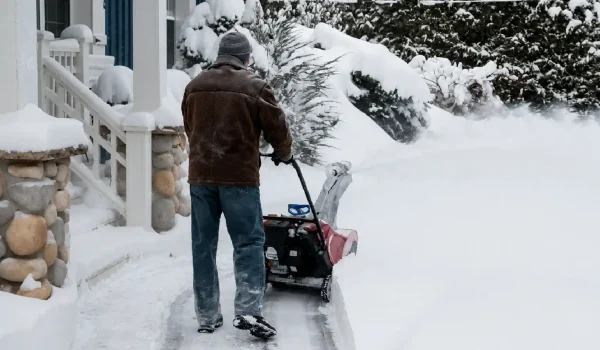
Sidewalks and pedestrian paths from the lot to building entrances require separate attention. A cleared and salted parking area with an icy path to the front door leaves a significant liability gap. Pedestrian surface treatment should be included in the service scope, not assumed.
Refreeze: The Problem That Shows Up Hours After Plowing
Refreeze is one of the most common causes of post-storm slip-and-fall incidents on commercial properties. Snow melting during daytime hours runs off cleared surfaces, collects in low points or along curb lines, and freezes solid when temperatures drop after sunset.
Monitoring for refreeze requires a return visit or overnight check after temperatures fall. Properties plowed and treated in the morning can develop black ice by evening without any additional snowfall. A professional snow management agreement should include refreeze monitoring and treatment as part of the storm scope, particularly for properties with foot traffic throughout the day.
Safe Means More Than Cleared.
A commercial parking lot looking plowed and one genuinely safe for employees, customers, and delivery vehicles are not always the same thing. Sequence, technique, priority zoning, ice management, and refreeze response close the gap between the two. Property owners across Bellingham and the surrounding MetroWest communities can review the full range of commercial property services available in this area.
Frequently Asked Questions
What order should a commercial parking lot be plowed? Fire lanes and emergency access routes come first, followed by ADA accessible spaces and access aisles, then main traffic lanes and entrances, and finally secondary parking areas. Priority sequence is determined by safety and legal compliance requirements.
What is back dragging in snow plowing? Back dragging is a technique where the plow operator uses reverse to pull snow away from buildings, loading docks, and tight spaces before pushing it toward pile zones. Pushing snow directly against structures causes drainage and damage issues during melt cycles.
What de-icing product works best for commercial lots in Massachusetts? Calcium chloride and magnesium chloride are preferred in this region. Both work at lower temperatures than sodium chloride and cause less long-term damage to pavement surfaces. Sodium chloride loses effectiveness below 15 degrees Fahrenheit, which matters during the coldest storms.
Why does black ice form after a parking lot is plowed? Snow melting during the day runs off and collects in low points. When temperatures drop in the evening, that water freezes into black ice with no visible warning. A professional snow management plan includes refreeze monitoring and treatment after temperatures fall, not just during the storm.
Do commercial parking lots need to have accessible spaces cleared first? Accessible parking spaces and their access aisles must remain fully operational under Massachusetts MAAB regulations. Clearing regular spaces before accessible ones creates compliance issues and liability exposure.
Keep Your Commercial Property Safe All Winter.
A parking lot looking cleared is not necessarily a safe one. Professional snow and ice management means knowing the right sequence, the right products, and the right timing for every storm, not just showing up with a plow. J.Gudiel Landscape Inc. has been managing commercial snow and ice removal across Bellingham and 30+ Massachusetts communities since 2000. Every storm was managed personally, with the right equipment and full insurance coverage.
Seasonal contracts and pre-season site assessments available now.
Call or text 508-380-0048 before the season starts.