
Signing a snow ploughing contract without reading it carefully is how commercial property owners in Massachusetts end up liable for injuries they assumed the contractor would cover.
A slip-and-fall on an uncleared walkway, a missed plow during a storm, a contractor without adequate insurance. None of these become your contractor’s problem automatically. Massachusetts law makes property owners responsible for keeping their premises safe and accessible, regardless of who they hired to do the clearing. Getting that protection right means knowing what to look for before the contract is signed, not after the first storm.
Your Liability Does Not Disappear When You Hire a Snow Company
Many commercial property owners assume that once a snow ploughing contractor is in place, responsibility for injuries on their property shifts entirely to that contractor. Massachusetts law does not work that way.
The Massachusetts Supreme Judicial Court established in 2010 that property owners can be held liable for snow and ice hazards on their premises, even when those conditions result from natural accumulation. This removed a long-standing protection that had shielded property owners from slip-and-fall claims when they could argue the snow just fell that way.
What this means in practice: if someone is injured on your property due to snow or ice, both you and your snow contractor may be named in the claim, regardless of who was responsible for clearing that area. The contract you have in place determines how that liability is allocated. A well-written agreement with clear scope and indemnification language protects you. A vague one does not.
Verify Insurance Before Signing Anything
A snow ploughing company operating on your commercial property should carry general commercial liability insurance and workers’ compensation coverage. Both matter. General liability covers property damage and third-party injury claims. Workers’ compensation covers injuries to the contractor’s employees while working on your site.
Ask for a certificate of insurance before any work begins. The certificate should name your business as an additional insured on the policy. This is not a formality. It ensures that if a claim arises from snow removal activity on your property, the contractor’s policy responds first.
Also verify the coverage limits are adequate for a commercial property. A policy with low liability limits may not cover a serious injury claim. Ask the contractor directly what their general liability limit is and confirm it is appropriate for the scale and foot traffic of your property.
Per-Push vs. Seasonal Contracts: What Each One Means
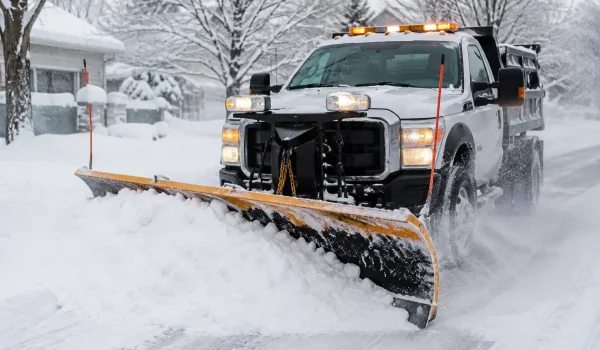
Snow plowing contracts typically fall into two structures. A per-push contract means you pay each time the contractor clears your property. Pricing is usually based on snowfall depth, with different rates for two to four inches, four to six inches, and so on. This structure works well in lower-snowfall winters but becomes expensive in heavy seasons.
A seasonal contract covers the full winter for a fixed price, regardless of how many storms occur. This gives you predictable costs and guarantees priority service. In a heavy season it saves money. In a light season it costs more than per-push would have. For most commercial properties in Massachusetts, the predictability and priority placement of a seasonal contract outweigh the cost variability.
What matters most is that the contract clearly defines what is included: which areas of your property are covered, what triggers service, and what constitutes an additional charge. Anything left vague in the contract language will cause problems during the season.
Trigger Depth: The Detail That Determines When They Show Up
Trigger depth is the snow accumulation level that activates service under the contract. Most commercial contracts set this at two inches. When snowfall reaches that threshold, the contractor dispatches equipment to your property without you needing to call.
For high-traffic commercial properties, a two-inch trigger is standard. If your property has pedestrian areas with heavy foot traffic, entrances that need to remain clear at all times, or loading docks where access is critical, you may want to discuss a one-inch trigger with your contractor. The frequency of service visits increases, and so does the cost, but so does the level of protection.
The trigger depth should be written into the contract, not just agreed verbally. It determines the timing of service for every storm, and ambiguity here is one of the most common sources of disputes between property owners and snow contractors.
Snow Ploughing and Ice Management Are Not the Same Thing
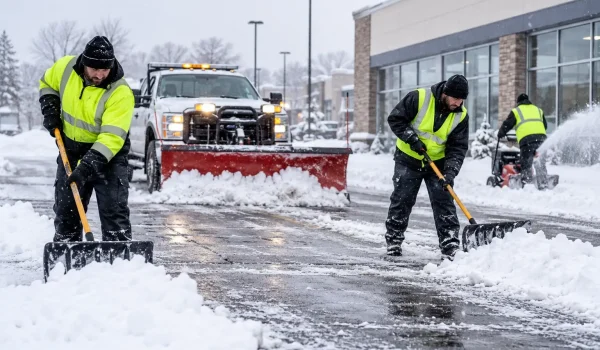
A cleared parking lot is not a safe parking lot if it has an ice layer underneath. Ice management, which includes pre-treatment with liquid brine before storms and salting or sanding after ploughing, is a separate service from snow removal. Many contractors offer both but bill them separately. Know before you sign which is included and which is additional.
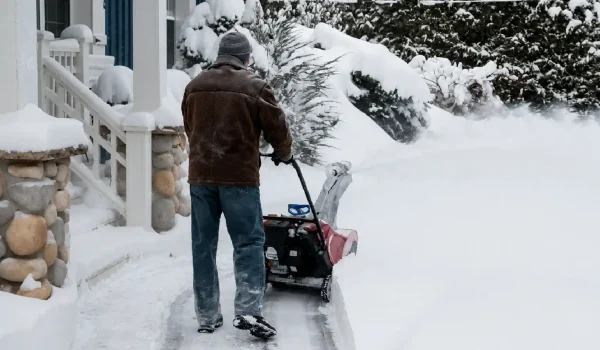
Sidewalk and pedestrian walkway clearing is often billed separately from parking lot ploughing. A ploughed lot with an icy path to the front entrance leaves a significant liability gap. Confirm exactly which areas of your property are in scope before signing, and ask whether pre-treatment is included or carries an additional charge.
Questions to Ask Before You Commit
Ask how long the contractor has been servicing commercial properties in this area. Commercial sites require different equipment, crew capacity, and response protocols than residential work. Experience matters when a Nor’easter hits at 2am.
Ask what the defined response time is after trigger depth is reached. Reliable contractors put this in the contract. If the answer is a general assurance rather than a specific window, that is worth noting before you sign.
Ask whether any of the work is subcontracted. Some companies sell the contract and outsource the ploughing to a third party. Know who is actually showing up at your property and who you call when something goes wrong.
The Contract You Sign in October Determines How Your Winter Goes.
Snow management is one of those services where the difference between a good contractor and a bad one shows up at the worst possible time, during a storm, when access to your property matters most. Getting the liability structure right, verifying insurance, understanding the contract terms, and knowing exactly what is included before the season starts is what separates a smooth winter from a costly one.
Commercial property owners who want a contractor that covers all of this correctly before the season starts can learn more about commercial snow and ice management in the Bellingham and MetroWest area
Frequently Asked Questions
What insurance should a commercial snow plowing company carry? At minimum, general commercial liability insurance and workers’ compensation. Ask for a certificate of insurance naming your business as an additional insured. Confirm the liability limits are appropriate for your property’s size and foot traffic.
What is a trigger depth in a snow contract? Trigger depth is the snowfall accumulation level that automatically activates service. Most commercial contracts set this at two inches. Higher-traffic properties may negotiate a one-inch trigger. It should be written into the contract, not just agreed verbally.
What is the difference between a per-push and a seasonal snow contract? A per-push contract charges per service visit based on snowfall depth. A seasonal contract covers the full winter for a fixed price regardless of storm frequency. Seasonal contracts offer predictable costs and priority service placement.
Is ice management included in a snow ploughing contract? Not always. Salting, pre-treatment, and sidewalk clearing are often billed separately from ploughing. Review the scope of services carefully and confirm which areas of your property are covered and which are additional.
Secure Your Property With a Snow Management Company You Can Trust.
A missed plow or an icy walkway is not just an inconvenience. For a commercial property in Massachusetts, it is a liability. You need a snow management company that shows up on time, every time, with the right equipment and coverage to protect your property and your business.
J.Gudiel Landscape Inc. has been providing commercial snow and ice management across Bellingham and 30+ Massachusetts communities since 2000. Ploughing, salting, and ice control were managed personally every storm.
Fully insured. Contracts available. Pre-season site assessments included.
Call or text 508-380-0048 to discuss your property before the season starts.