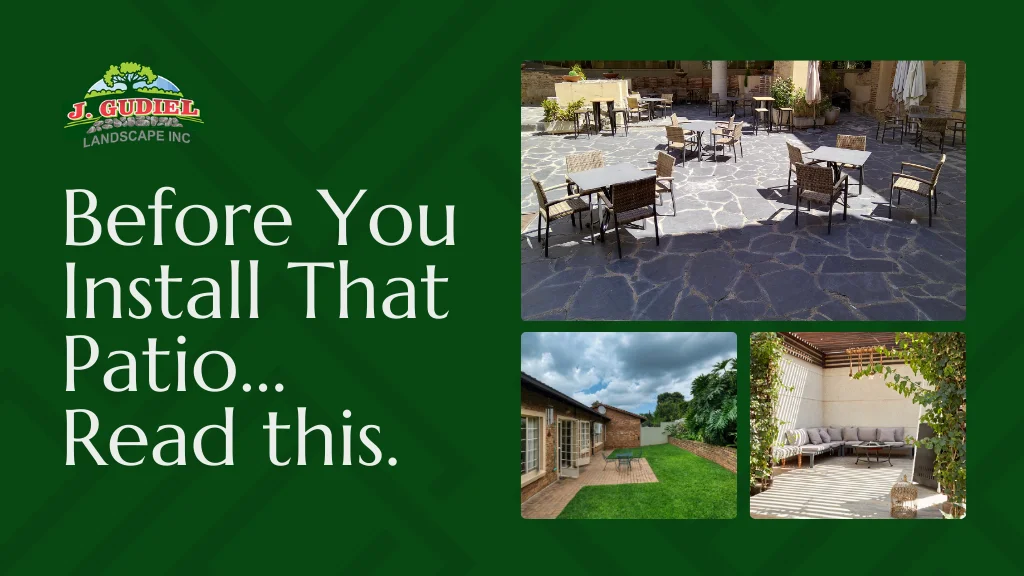
A patio that looks beautiful in September can start showing serious damage by April. Cracked pavers, shifted flagstones, flaking concrete. If you have seen it happen, it was almost certainly a material or installation problem rather than just bad luck.
Massachusetts averages 30 to 40 freeze-thaw cycles every winter. That means the ground expands and contracts dozens of times between November and March. Water finds its way into even small pores and gaps in patio materials, freezes, expands by roughly nine percent, and pushes outward with enough force to crack stone, heave pavers, and destroy mortar joints. The wrong material fails fast. The right material, installed correctly, lasts for decades without issue.
This covers the main patio materials available to Massachusetts homeowners, how each one performs through our winters, and what actually determines whether a patio holds up long term.
Before the Material: Why Base Preparation Decides Everything
No patio material performs well on a poor base. This is the part most homeowners do not see and the part that separates a patio that lasts 25 years from one that needs repairs in three.
In Massachusetts, the frost line sits at 48 inches. Properly installed hardscape requires a compacted gravel base that extends below the point where the ground freezes and thaws. When that base is shallow or inadequately compacted, the ground movement of winter works directly against the surface above it. Pavers shift. Flagstone lifts. Concrete slabs crack along stress points. The material gets blamed, but the base is usually the real cause.
Drainage is the other half of the equation. Water that pools under or around a patio and has nowhere to go will freeze and push. Proper slope, gravel base depth, and in some cases edge drainage are what prevent that from happening. Any contractor who skips these steps to save time or cost is building a patio that will fail regardless of what it is made from.
Concrete Pavers: Reliable, Versatile, and Easy to Repair
Concrete pavers are the most common choice for Massachusetts patios and for good reason. Modern concrete pavers manufactured for cold climates are engineered with low water absorption rates and high compressive strength, typically above 8,000 psi. That density is what allows them to handle freeze-thaw stress without cracking or spalling.
One practical advantage concrete pavers have over poured concrete is repairability. If a paver cracks or a section heaves, individual pieces can be pulled up, the base regraded, and new pavers set in place. With a poured slab, any repair is visible and structural cracks tend to reopen over time.
The design range is wide. Concrete pavers come in dozens of shapes, sizes, and textures, including finishes that closely mimic natural stone. For homeowners who want design flexibility without paying natural stone prices, they are the most practical option.
What to watch for:
- Look for pavers rated for freeze-thaw conditions specifically, not just general outdoor use. The specification matters.
- Lighter colors show efflorescence, a white mineral residue that migrates to the surface, more visibly than darker tones. Sealing can minimize this.
- Polymeric sand in the joints resists washout and discourages weed growth. Standard sand needs regular replenishment.
Bluestone: The Classic Massachusetts Choice
Bluestone has been used on New England patios and walkways for generations and remains one of the best-performing natural stone options for this climate. Quarried primarily in New York and Pennsylvania, dense bluestone has a naturally low water absorption rate, which is the key property for freeze-thaw resistance. Water cannot penetrate far enough to cause damage when it freezes.
The surface texture of natural cleft bluestone provides reliable traction when wet, which matters for Massachusetts winters where rain, sleet, and ice can coat patio surfaces without warning. Thermally finished bluestone, which has a smooth sawn surface, looks cleaner and more formal but requires more attention to traction in icy conditions.
Bluestone develops a patina over time that many homeowners find appealing. The color deepens slightly with age and the stone takes on a lived-in quality that manufactured materials do not replicate. Properly installed and sealed every three to five years, a bluestone patio is a long-term investment that holds its value well.
What to watch for:
- Not all bluestone is the same density. Always confirm with the supplier that the stone is rated for freeze-thaw environments. Thinner or lower-density pieces are more vulnerable.
- Minimum thickness for a patio application is 1.5 inches. Thinner pieces crack under load and freeze-thaw pressure.
- De-icing salts damage bluestone over time. Use sand for traction in winter and avoid sodium chloride products directly on the surface.
Granite Pavers: The Most Durable Option Available
Granite is the most freeze-thaw resistant patio material you can install in Massachusetts. Its density and near-zero porosity mean water essentially cannot penetrate the surface. It does not crack, chip, or degrade under freeze-thaw stress the way less dense materials can over time.
The trade-off is cost. Granite pavers sit at the high end of the price range for patio materials, and the installation work is more demanding because of the weight involved. For homeowners planning a patio they want to last a lifetime without replacement, granite earns its price. It is also the right choice for heavy-use applications like pool surrounds, steps, and driveway aprons where both durability and traction matter.
Granite comes in a range of colors from light grey to charcoal to warm reddish tones, and the surface can be left rough-cut for traction or honed smooth for a more polished appearance.
Poured Concrete: Understand the Limitations Before Committing
Poured concrete is the least expensive option upfront and the most problematic in Massachusetts over time. The issue is that concrete slabs are monolithic. They cannot flex with seasonal ground movement the way individual pavers can. When the ground shifts below a concrete slab, the slab cracks, and those cracks tend to grow and reopen with each subsequent winter cycle.
Salt damage compounds the problem. Road salt and ice melt products that contain sodium chloride cause concrete surfaces to spall, meaning the top layer flakes off in sheets. Once spalling starts it is difficult to stop without resurfacing the entire slab.
Poured concrete is not a bad material everywhere. In a climate with minimal freeze-thaw cycles it performs fine. In Massachusetts, it requires careful mix design with air entrainment, proper curing, a well-prepared base, and realistic expectations about longevity and maintenance. If budget is the primary driver, concrete pavers give you better long-term value than a poured slab in this climate.
The Material Is Only Part of the Decision
Every material on this list can perform well or fail depending on how it is installed. The base depth, drainage, joint material, and slope all matter as much as the surface you choose. A granite patio on a three-inch gravel base will fail. A concrete paver patio on a properly excavated and compacted base with good drainage will last for decades.
When you are comparing quotes for a patio project, ask specifically about base preparation depth, gravel specification, and how drainage is being handled. A contractor who cannot answer those questions clearly is cutting corners you will pay for later.
Not Sure Which Material Is Right for Your Yard?
The right choice depends on how your property drains, how much sun and shade the area gets, and what your budget covers for both material and base preparation. There is no one-size answer.
J. Gudiel Landscape has been designing and installing hardscape in Bellingham and across Massachusetts for over 20 years. We know which materials perform on this soil and which ones do not.
Call or text 508-380-0048 to talk through your project. Free consultation.