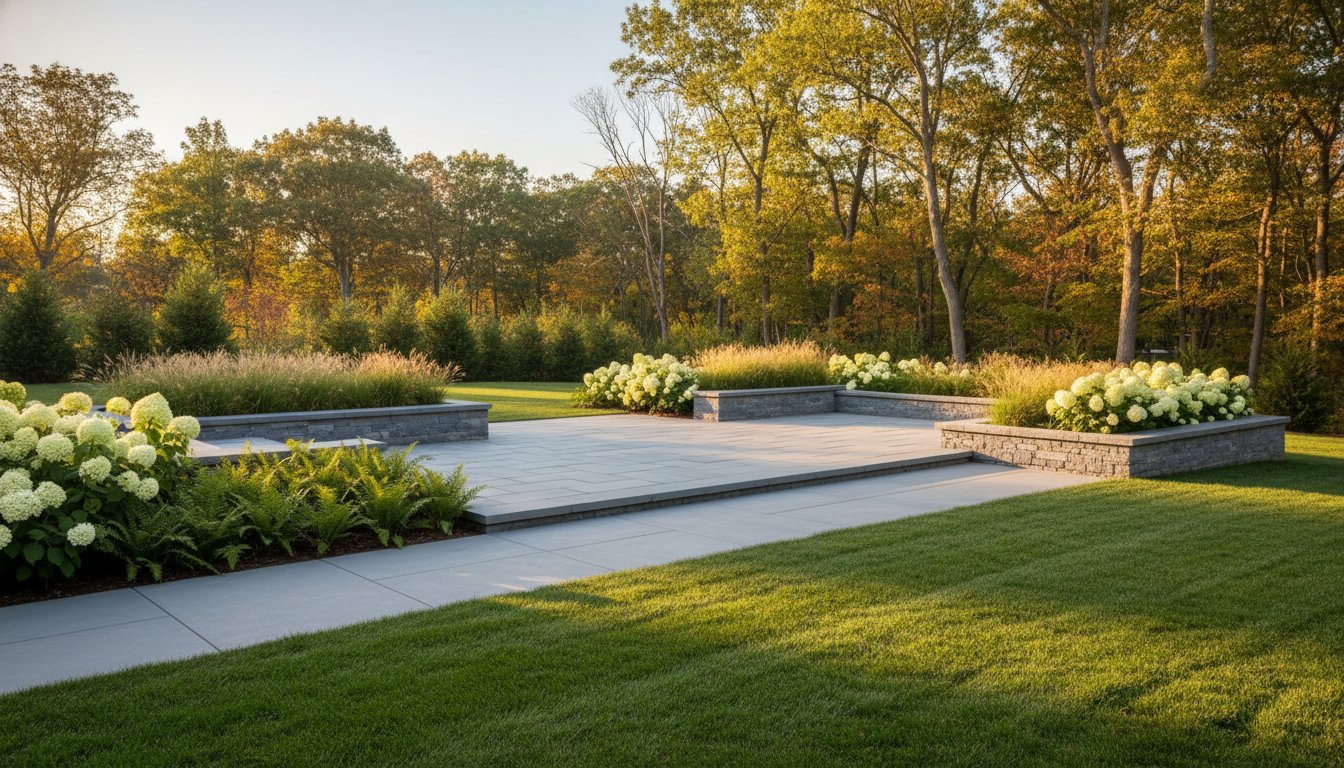

Planning the perfect outdoor living space often feels overwhelming, especially when you’re faced with industry terms that sound more confusing than helpful. You have a vision for a beautiful new patio or a durable retaining wall, but you’re unsure how to start, how to balance your budget between plants and pavers, or how all the elements will ultimately look together. A truly successful design begins with a clear understanding of the essential partnership between landscape and hardscape—the foundational elements of every functional and beautiful outdoor environment. Hardscape provides the durable structure like walkways and patios, while landscape offers the living softness of plants, grass, and gardens.
In this complete design guide, we draw on over 20 years of expert craftsmanship to demystify these concepts for you. You will discover actionable ideas for your own property and learn how to combine stone and soil to create a cohesive, valuable, and lasting extension of your home. By the end, you’ll have the confidence to plan your project and speak with a contractor to bring your vision to life.
Defining the Core Elements: What Is Hardscape vs. Landscape?
To create an exceptional outdoor environment, it’s essential to understand its two fundamental components. Think of it this way: hardscape provides the sturdy “bones” of your yard, giving it shape and permanent structure. Landscape, often called softscape, is the living, breathing element that softens that structure with color, texture, and life.
A truly successful design is achieved when these two are expertly balanced. The right combination of landscape and hardscape not only creates beautiful, usable “outdoor rooms” for your family to enjoy but also significantly enhances your property’s curb appeal and long-term value. Both are crucial investments in the function and beauty of your home.
Understanding Hardscape: The Foundation of Your Outdoor Space
Hardscape encompasses all the non-living, man-made features integrated into your property. In landscape architecture, the definition of what is hardscape includes the durable, foundational elements that provide structure, define spaces, and improve usability. These components are built to last, forming the permanent framework of your outdoor design.
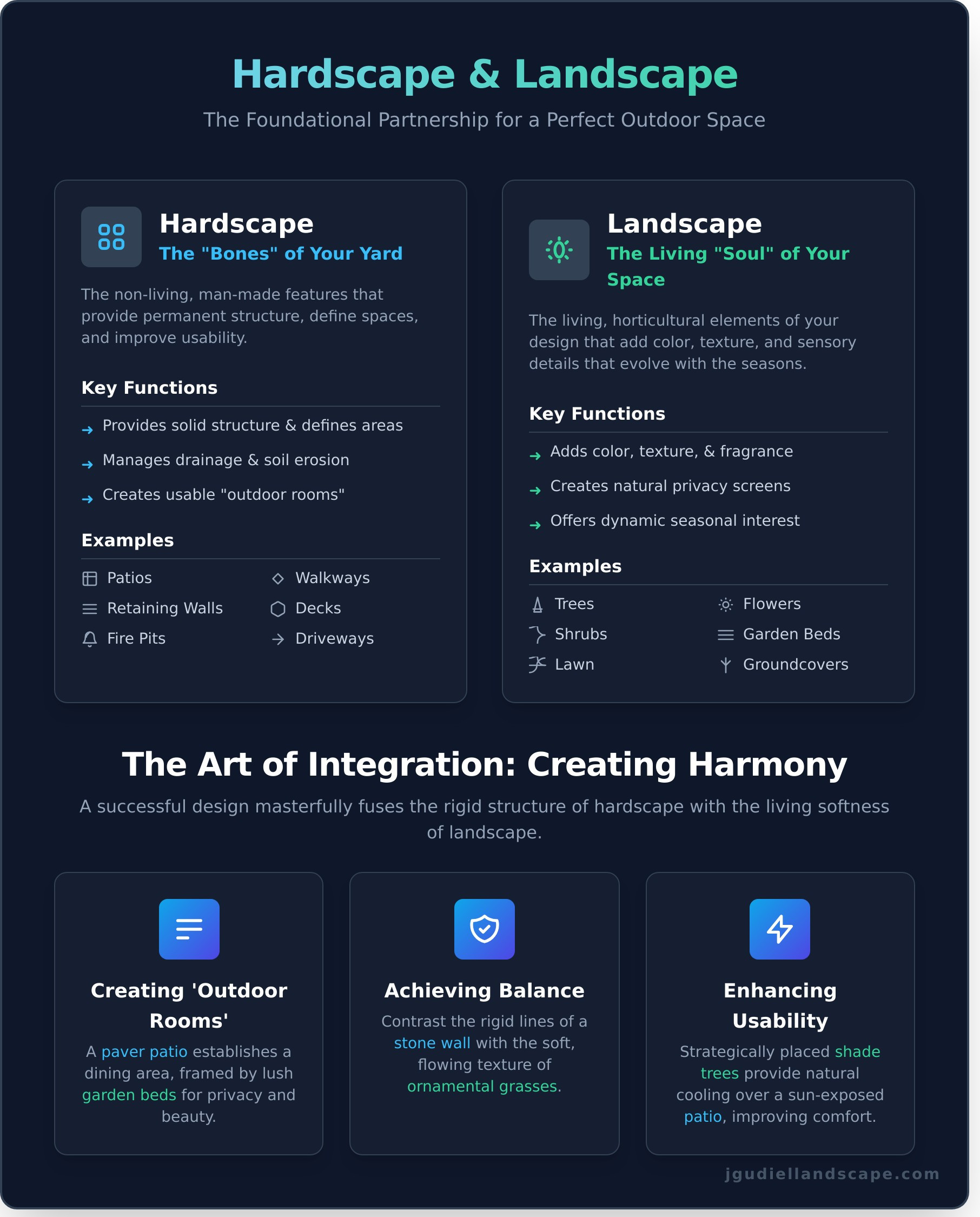
- Examples Include: Patios, retaining walls, walkways, driveways, decks, and outdoor fire pits.
- Key Functions: Provides solid structure, creates distinct functional areas, and helps manage practical issues like drainage and soil erosion.
- Common Materials: Durable options like pavers, natural stone, concrete, and wood are expertly crafted to withstand the elements.
Understanding Landscape: The Living, Breathing Elements
In contrast, landscape—or softscape—refers to all the living, horticultural elements of your design. This is the vibrant component that brings your yard to life, adding sensory details that change and evolve throughout the year. It provides the lush, natural beauty that complements the solid structure of your hardscaping.
- Examples Include: Trees, shrubs, perennial flowers, grass lawns, and garden beds.
- Key Functions: Adds color, texture, and fragrance; creates natural privacy screens; and offers dynamic seasonal interest.
- Unique Quality: Unlike the permanence of hardscape, your softscape is ever-changing as it grows and adapts to the seasons.
The Art of Integration: How Hardscape and Landscape Work Together
A truly exceptional outdoor space is never just a beautiful garden or a well-built patio; it is the masterful fusion of both. The most successful projects treat landscape and hardscape not as separate components, but as two essential elements in a single, cohesive design. Hardscape provides the durable structure—the “bones” of your outdoor living area—defining its function and ensuring its longevity. In turn, the landscape provides the “softscape,” the living, breathing elements that soften hard edges, add color and texture, and seamlessly integrate the construction into the natural environment.
The goal is to create a seamless flow that guides you through the property, connecting different areas with purpose and style. A well-placed walkway doesn’t just get you from the driveway to the door; it creates a journey. This thoughtful planning, which is a core part of the professional landscape design process, ensures that every element, from a stone wall to a flowering shrub, serves the greater vision. Without this integration, a beautiful paver patio can feel stark and disconnected from the rest of the yard.
Creating Structure and ‘Outdoor Rooms’
Hardscape elements are fundamental in establishing functional zones, much like the walls and floors of a home. By combining these permanent structures with strategic plantings, you can design inviting and practical “outdoor rooms.” This synergy transforms a simple backyard into a multi-functional extension of your living space.
- A durable paver patio (hardscape) establishes the foundation for a dedicated seating or dining area.
- Lush garden beds (landscape) frame the patio, providing a sense of enclosure, privacy, and natural beauty.
- A clean, well-defined walkway (hardscape) creates a clear and safe path connecting the patio to your home or other garden features.
- Low-maintenance perennials and groundcovers (landscape) line the walkway, softening its edges and adding seasonal interest.
Achieving Balance, Contrast, and Harmony
The interplay between the rigid, permanent nature of hardscape and the soft, evolving nature of landscape is where true design artistry shines. A balanced design uses contrast to highlight key features and harmony to create a feeling of peace and completeness. The key is ensuring every choice feels intentional and contributes to a unified aesthetic.
- Contrast the strong, rigid lines of a stone retaining wall with the soft, flowing textures of ornamental grasses.
- Use vibrant, colorful flowers to create a stunning visual pop against neutral-toned pavers or natural stone.
- Plant strategically placed shade trees to provide natural cooling over a sun-exposed patio, enhancing its comfort and usability.
- Ensure the scale is correct: large, bold hardscape features require substantial plantings to match, while delicate walkways are best complemented by smaller plants.
Popular Hardscape Features to Anchor Your Design
While softscape elements like plants and turf bring life to your yard, hardscape features provide the essential structure and usability. These permanent installations are the backbone of a functional outdoor space, defining how you live, entertain, and interact with your property. A well-executed landscape and hardscape design integrates these features seamlessly, turning a simple yard into a true extension of your home. Planning these core elements is a critical first step, as detailed in this comprehensive guide to landscape design from NC State Extension.
Patios and Walkways: The Heart of Outdoor Living
Patios serve as the primary destination for outdoor dining, relaxation, and entertaining. They create a stable, clean surface for furniture and foot traffic. Connected by expertly laid walkways, these features guide movement through your property, linking zones like the back door, a garden, or a poolside area. Material choices impact both aesthetics and durability:
- Concrete Pavers: Versatile, durable, and available in countless styles and colors.
- Natural Stone: Offers timeless, organic beauty with unique textures for a high-end finish.
- Brick: Provides a classic, traditional look that complements many architectural styles.
Regardless of the material, a professionally installed, compacted base is non-negotiable for preventing shifting and ensuring a long-lasting, level surface that withstands the seasons.
Retaining Walls: Function Meets Form
More than just decorative, retaining walls are master-crafted solutions for properties with slopes. Their primary purpose is to hold back soil, prevent erosion, and create usable, level ground for patios, gardens, or play areas. By terracing a hillside, a retaining wall can transform an unusable slope into a series of beautiful, functional spaces. Built from durable materials like segmental blocks, natural stone, or treated timber, these structures also add valuable vertical dimension and visual interest to your property.
Fire Pits and Outdoor Kitchens: Extending Your Season
To maximize your investment, consider features that extend the time you can spend outdoors. A custom fire pit creates a natural gathering spot for cool evenings, providing warmth and ambiance. An outdoor kitchen elevates your entertaining capabilities, expanding your home’s living area and making hosting a seamless experience. These highly desirable amenities not only enhance your lifestyle but also significantly boost your property’s appeal and market value. See our portfolio of custom hardscape projects.
Choosing Plants (Softscape) to Complement Your Hardscape
A master-crafted stone patio or walkway is the foundation of your outdoor living space, but the plants surrounding it are what bring the design to life. Choosing the right softscape is just as critical as selecting your hardscape materials. The goal is to enhance, not hide, your investment with plants that offer beauty, function, and longevity. When planning your complete landscape and hardscape design, it’s essential to consider a plant’s mature size, maintenance needs, and year-round interest to ensure it thrives in the Massachusetts climate.
Selecting Plants for Function and Aesthetics
Strategic plant selection ensures every part of your landscape serves a purpose while contributing to a cohesive, beautiful environment. By layering different types of plants, our experts create depth, texture, and visual interest that perfectly complements your hardscape features.
- Evergreen Shrubs: Plants like Boxwood and Holly provide year-round structure and are ideal for creating privacy screens along patios or defining outdoor rooms.
- Perennials and Grasses: Varieties such as Coneflower, Black-Eyed Susan, and Switchgrass add seasonal color, texture, and movement, softening the hard lines of stone walls.
- Groundcovers: Creeping Thyme or Sedum can be planted between pavers or along walkway edges to suppress weeds and add a touch of green to durable surfaces.
- Ornamental Trees: A Japanese Maple or Dogwood can serve as a stunning focal point, providing shade and vertical interest to your patio design.
Low-Maintenance Landscaping for a Busy Lifestyle
A beautiful landscape shouldn’t require constant work. By making smart choices from the start, you can create a durable and largely self-sufficient garden. We specialize in designing low-maintenance landscapes that protect your investment of time and money. Incorporating native Massachusetts plants that are naturally adapted to our soil and weather is a key strategy. These hardy selections, like New England Aster or Little Bluestem grass, require less water and intervention to flourish.
Furthermore, grouping plants with similar sun and water needs simplifies care routines, while applying a quality layer of mulch helps retain soil moisture and reduce weed growth. These expert techniques result in a landscape that remains healthy and pristine with minimal effort.
Thoughtful plant selection is the final, critical step in creating a truly integrated landscape and hardscape project. It ensures the living elements of your design work in harmony with the structural ones for years to come. With over 20 years of experience, the team at J. Gudiel Landscape has the local expertise to select the perfect plants for your property. Contact us today to create a beautiful, functional, and sustainable outdoor space.
Planning Your Project: Budget, Materials, and Hiring a Professional
Transforming your outdoor vision into a durable, beautiful reality requires careful planning. A well-structured approach is the foundation of a successful landscape and hardscape project, ensuring your investment enhances your property for decades. This final step bridges inspiration and execution, addressing the practical considerations of budget and professional expertise.
Budgeting for Your Outdoor Investment
Understanding the costs involved is crucial for a smooth process. Hardscape elements like stone patios, retaining walls, and walkways typically represent the largest portion of the budget due to the cost of quality materials and the skilled labor required for proper installation. A comprehensive budget should always account for:
- Design and Planning: The professional blueprint for your project.
- High-Quality Materials: The pavers, natural stone, and blocks that ensure longevity.
- Expert Labor: The cost of skilled masons and installers.
- Site Preparation: Includes excavation, grading, and base preparation.
- Permits: If required by your local municipality.
Remember to view this as a long-term investment in your property’s value and usability. For larger visions, projects can often be completed in phases, allowing you to build your dream outdoor space over time without compromising on quality.
Why Hire an Integrated Landscape and Hardscape Company?
While it may be tempting to hire separate contractors, choosing a single, integrated firm offers unmatched advantages. A team that masters both disciplines ensures a cohesive vision where every element works in harmony. They understand how the grade of a new patio will affect lawn drainage and which plants will complement stonework without causing future damage from root systems.
A professional design-build company manages all the complex logistics, from securing permits to coordinating material deliveries and ensuring every installation meets the highest standards of craftsmanship. Look for a partner with a strong local portfolio, proven experience, and a commitment to quality. This unified approach not only guarantees a superior result but also saves you time, money, and needless stress.
With over 20 years of experience, the team at J. Gudiel Landscape provides expert guidance from initial concept to final installation. Contact us today to ensure your project is planned and built with precision and care.
Bring Your Vision to Life with Expert Landscape and Hardscape Design
A truly exceptional outdoor space is born from the thoughtful integration of structural hardscape and living softscape. Understanding how durable patios, walls, and walkways anchor your design while vibrant plants provide complementary color and texture is the key to a balanced environment. Proper planning—from budget to materials—turns your initial vision into a functional and beautiful reality that you can enjoy for years to come.
Turning that plan into a masterpiece requires a partner with proven expertise. For over 20 years, J. Gudiel Landscape has been the trusted, full-service landscape and hardscape partner for communities across Massachusetts. Our reputation is built on expert design and master craftsmanship, ensuring every project we undertake is a durable, valuable, and stunning addition to your property.
Ready to transform your outdoor space? Get a free, no-obligation estimate today. We are committed to helping you create the beautiful, enduring outdoor oasis you deserve.
Frequently Asked Questions
What should be installed first, the hardscape or the landscape?
As a rule, hardscape elements like patios, walkways, and retaining walls should always be installed first. This process involves heavy equipment, excavation, and site disruption that would damage new plantings, turf, or irrigation systems. Installing the foundational structures first ensures a clean, stable base for the softer landscape elements to be added later. This methodical approach protects your investment and guarantees a more efficient, high-quality project completion from our experienced team.
How can I make my small backyard look bigger with landscape and hardscape design?
To create the illusion of a larger space, our expert landscape and hardscape designers use several proven techniques. We incorporate vertical elements like trellises or tall, narrow plantings to draw the eye upward. Laying pavers on a diagonal can make a patio feel wider, while a cohesive color palette for both plants and materials creates unity. Defining distinct outdoor ‘rooms’ with low seating walls or varied ground cover also adds depth without clutter, maximizing every square foot.
What are the most durable materials for a patio in the Massachusetts climate?
For the demanding Massachusetts climate, durability is key. We strongly recommend natural stones like granite and bluestone, as their density makes them highly resistant to the freeze-thaw cycles that cause cracking. High-density concrete pavers from trusted manufacturers are another exceptional choice, specifically engineered to withstand moisture and de-icing salts. These materials ensure your patio remains beautiful and functional for decades, representing a sound, long-term investment for your home.
How much value does a well-designed landscape and hardscape project add to a home?
A professionally designed landscape and hardscape project is a significant investment that delivers a strong return. According to industry experts, a master-crafted outdoor living space can increase a home’s value by 10% to 20%. It enhances curb appeal, which is critical for a first impression, and adds functional square footage with features like patios and fire pits. This makes your property more attractive to potential buyers and enhances your own enjoyment of the home.
Can I mix different types of stone and pavers in my hardscape design?
Absolutely. Mixing materials is an excellent way to add visual interest and define different functional areas. For example, a bluestone patio can be elegantly framed with a cobblestone or brick paver border. You can also create an accent area, like a circular inlay for a dining set, using a contrasting paver. The key to a successful design is maintaining a cohesive color palette or texture to ensure the final look is intentional and harmonious, not chaotic.
What is the difference between a landscaper and a landscape architect?
While the terms are often used interchangeably, there is a key distinction. A landscape architect is a state-licensed professional with a formal degree, qualified to design complex projects and manage large-scale grading and drainage issues. A landscaper, or landscape contractor, is the expert who physically installs and maintains the plants, patios, and walls based on a design. Our seasoned team includes both skilled designers and master craftsmen to handle every phase of your project expertly.
How do I maintain my new paver patio and plantings?
Protecting your investment is straightforward with proper care. For your paver patio, regular sweeping and occasional rinsing will prevent buildup. We recommend applying a jointing sand stabilizer to inhibit weed growth and having it professionally cleaned every few years. For your new plantings, ensure consistent watering as they establish, maintain a 2-3 inch layer of mulch to retain moisture, and perform seasonal pruning as needed. We also offer comprehensive maintenance plans to keep your property pristine.