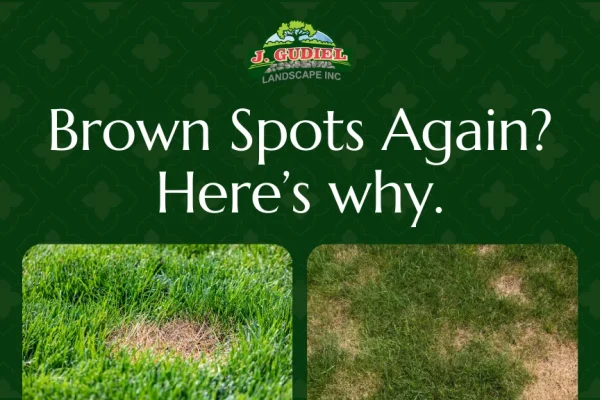

Your neighbor’s lawn bounces back full and green every spring. Yours looks thin, patchy, and tired no matter how much you fertilize or water. The problem is probably not what you are putting on your lawn. It is when you are doing the work.
Massachusetts lawns are made up of cool-season grasses like tall fescue and Kentucky bluegrass. These grasses have a specific biological window where aeration and overseeding actually take hold. Miss that window by a few weeks and you waste a season. Nail it, and you can see a noticeably thicker, healthier lawn within months.
This guide covers the exact timing for Bellingham and MetroWest Massachusetts properties, the science behind why fall works and spring usually does not, what to do after aeration, and the most common mistakes that set homeowners back year after year.
Why Massachusetts Lawns Need Aeration More Than Most
Clay soil defines most yards in Bellingham and across MetroWest Massachusetts. Unlike sandy or loamy soil, clay compacts aggressively under foot traffic, mower weight, and the repeated freeze-thaw cycles that happen every winter in New England. When soil compacts, it cuts off the air, water, and nutrients that grass roots depend on. The result is a lawn that looks stressed even when you are giving it attention.
Core aeration solves this by pulling small plugs of soil from the ground, typically 1.5 to 3 inches deep. Those channels open up the root zone, improve drainage, and reduce thatch buildup. For Bellingham properties, where clay content is consistently high and the ground freezes solid every winter, annual core aeration is the single most effective maintenance step you can take for cool-season turf.
Homeowners who skip aeration and only fertilize are essentially feeding a lawn whose roots cannot absorb what they are being given. The nutrients sit at the surface or run off. Aeration is what makes everything else work.
The Best Time to Aerate Your Lawn in Massachusetts
Fall is the right season. Specifically, late August through mid-October.
This is based on how cool-season grasses behave, not general gardening advice. By late August, summer heat is breaking and soil temperatures are still above 50 degrees Fahrenheit, which is the minimum threshold for grass seed germination. Daytime air temperatures are dropping into the mid-60s and low 70s, which is exactly when Kentucky bluegrass and tall fescue grow fastest.
There is another reason fall timing is critical for New England lawns: crabgrass. This aggressive warm-season weed finishes its growth cycle by late summer. If you aerate in spring or early summer, you risk disturbing dormant crabgrass seeds and giving them the light and loose soil they need to establish before your new grass can compete. Fall aeration sidesteps that problem entirely.
For most Bellingham and surrounding MetroWest properties, target September 1 through October 10 as your aeration and overseeding window. Before September 1, you are still fighting summer heat and active weed pressure. After mid-October, soil temperatures drop too quickly for new seed to germinate and establish roots before the first hard frost arrives.
Spring Aeration: When It Helps and When It Does Not
Spring aeration, from mid-April through early June, is worth doing if your main goal is relieving compaction without overseeding. Aerating in spring helps water and fertilizer reach deeper into the root zone before summer heat sets in. If your lawn shows heavy thatch buildup or standing water after rain, spring aeration alone can make a meaningful difference.
Spring is not the right time for overseeding, though. New seedlings that germinate in April and May are immediately vulnerable to summer heat stress by July and August, before their root systems are deep enough to handle drought. If you seed in spring on a clay-based Massachusetts lawn, survival rates drop sharply once temperatures climb past 85 degrees. Save overseeding for fall when the odds are genuinely in your favor.
Aeration and Overseeding Work Best Together
Grass seed needs direct contact with soil to germinate. On a typical lawn surface, seed scattered over existing turf sits above the soil with minimal contact, leading to poor germination and patchy results. Core aeration changes that equation.
The holes left by the aerator create natural seed pockets. Overseeding immediately after aeration drops seed into those pockets where it makes direct soil contact almost immediately. Turf management research consistently shows that overseeding into aerated soil improves germination rates by 40 to 70 percent compared to surface seeding alone.
For Massachusetts lawns, choose a seed blend with at least 50 percent turf-type tall fescue alongside Kentucky bluegrass and perennial ryegrass. Look for blends labeled specifically for Northeast or New England conditions. These varieties are bred for the humidity, seasonal shade, and hard freezes that define Massachusetts growing conditions. Warm-season varieties like Bermuda grass will not survive a Massachusetts winter and should be avoided.
How to Prepare Your Lawn Before Aeration
A little preparation before the aerator arrives makes a significant difference in results. Mow your lawn two to three days before your scheduled aeration, cutting slightly shorter than normal but not scalping the grass. This makes it easier for the aerator tines to reach full depth.
Water your lawn thoroughly one to two days before, especially if the weather has been dry. You want the soil moist enough for the tines to pull clean plugs rather than bouncing off hard, dry ground. Do not water the morning of aeration to the point where the lawn is muddy.
Mark any irrigation heads, invisible fence lines, or shallow utility lines before the aerator runs. Most professional-grade aerators are heavy machines and can damage anything sitting close to the surface.
What to Do After Aeration and Overseeding
The first three weeks after aeration and overseeding are where most homeowners lose their results. New seedlings have almost no root system during this period and rely entirely on consistent moisture at the soil surface to survive.
Water lightly once or twice a day for the first two to three weeks, keeping the top inch of soil consistently moist. Once seedlings are visible and established, reduce watering to deeper, less frequent sessions that encourage roots to grow downward. This shift from surface watering to deep watering is what separates lawns that stay thick through summer from those that go thin again.
Do this after aeration:
- Apply a starter fertilizer with phosphorus within a few days of overseeding to support early root development
- Wait 14 days before mowing, mowing too early tears new roots before they are anchored
- Apply lime if your soil test recommends it , fall timing lets lime work over winter before spring growth begins
- Keep foot traffic minimal for at least three weeks
Avoid these common mistakes:
- Applying pre-emergent weed control after overseeding , these products prevent all seed germination, including your new grass
- Skipping watering for more than two consecutive days in the first three weeks
- Waiting until late October to start , Bellingham’s first frost typically arrives in mid-October, leaving little margin for germination
Your Lawn Has One Good Window Every Year. Make It Count.
Most Bellingham homeowners spend years fertilizing and reseeding a lawn that never improves, because the underlying compaction problem never gets addressed at the right time. Aeration during the correct window, paired with the right seed blend for Massachusetts soil, changes the entire trajectory of your lawn.
Stop Guessing. Get a Lawn That Actually Shows Results.
Most Bellingham homeowners spend years fertilizing and reseeding a lawn that never improves, because the underlying compaction problem never gets fixed. Aeration at the right time changes everything.
J Gudiel Landscape has been working with Bellingham soil and Massachusetts lawns for over 20 years. We know exactly when to aerate, what seed blend works in this region, and how to get your lawn thriving before winter sets in.
Call or text us at 508-380-0048 for a free lawn evaluation. No pressure, no guesswork.